top of page
.png)
COZUMEL
FOXES
SMALL BUT MIGHTY
A RACE TO SAVE A SPECIES NOT YET KNOWN
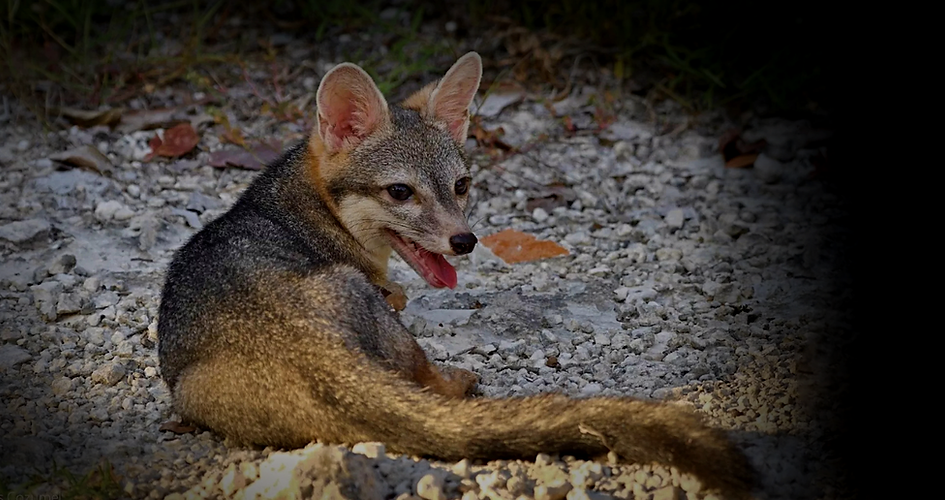
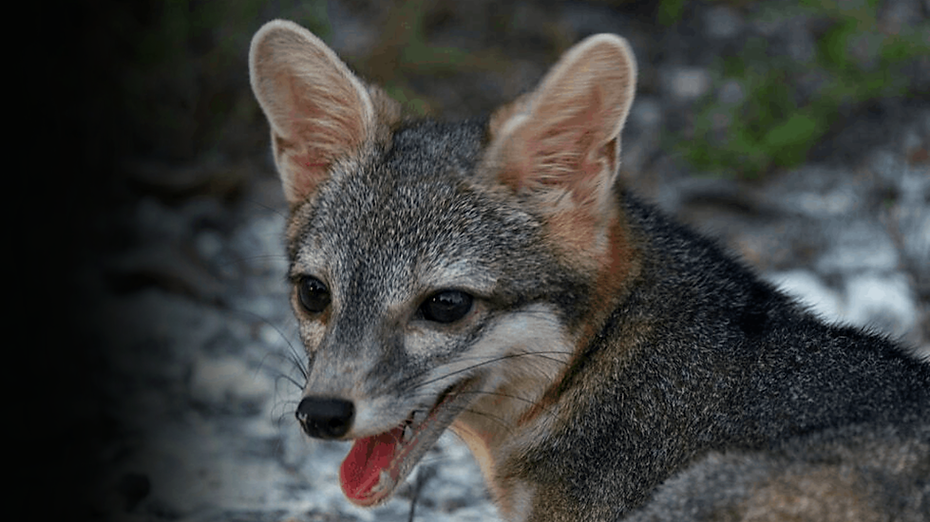
This photo represents the first image ever captured of a Cozumel fox. An undescribed species previously thought extinct.
Photo: Rafael Chacón

AN ISLAND PREDATOR FOUND NOWHERE ELSE
The Cozumel fox is one of the rarest canids on the planet. Found only on a small Caribbean island off the coast of Mexico’s Yucatán Peninsula, this dwarfed predator evolved in complete isolation from its mainland relatives, shaping itself to a world entirely its own.
Yet, despite its uniqueness, the Cozumel fox has never been formally described, leaving this remarkable species still unknown to the scientific world and hidden from conservation.
Sightings of the fox are extraordinarily rare. It had not been seen in over 25 years, leading many to believe it extinct.
Its entire existence depends on the health of a single island ecosystem.
A NEW SIGN OF HOPE

REDISCOVERED
The fox went decades without a single confirmed sighting, remaining hidden from conservation efforts and largely unknown to science.
In 2023, that changed. Local biologist Rafael Chacón captured a series of photographs that confirmed the foxes still persisted on the island, quietly holding on in a changing landscape.
This moment marked a turning point and served as an urgent call to action. A possible species once feared lost, may still be recovered if we act quicky.
These photos drive our work at Pathos Wildlife, to locate the remaining individuals and ensure this remarkable predator does not disappear again.
Photo: Rafael Chacón

TECHNOLOGY IN THE TROPICS
Saving a species this rare requires innovative tools.
Pathos Wildlife is combining cutting-edge technology with on-the-ground expertise to lead the first ever conservation effort to locate, study, and protect the elusive Cozumel fox.
Our work aims to formally describe this remarkable island canid as a new and distinct species, while uncovering how it persists in an increasingly human-dominated landscape.
DRONES AFTER DARK
SEEING THE UNSEEN
As a largely nocturnal animal, foxes are most active at night and during the low-light hours of dawn and dusk, when traditional survey methods are least effective.
Equipped with advanced infrared cameras, thermal drones allow us to survey Cozumel's forests from above by detecting the heat signatures of animals hidden in the dense understory below.
For a species that is so rarely observed, this technology greatly expands our ability to locate individuals during these key periods of activity.
By covering large areas quickly and non-invasively, these drones help us identify important habitat, estimate population size, and search for foxes in places that would otherwise be nearly impossible to survey on foot.
Once individuals are located from the air, field teams can follow up with targeted camera trapping and genetic sampling.
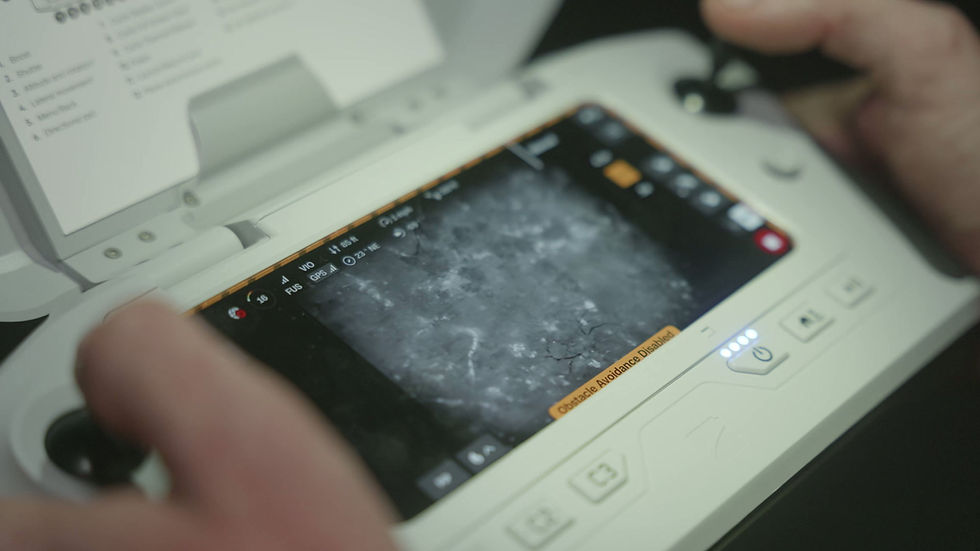
THERMAL IMAGERY IS ONLY THE FIRST STEP
IN A BROADER APPROACH WE ARE DEVELOPING TO STUDY ELUSIVE AND ENDANGERED ISLAND SPECIES.
WE ARE ACTIVELY TESTING NEW METHODS FOR AERIAL SPECIES IDENTIFICATION AND SYSTEMATIC SEARCH PROTOCOLS THAT ALLOW US TO EFFICIENTLY SCAN LARGE, INACCESSIBLE LANDSCAPES AND DISTINGUISH TARGET SPECIES FROM OTHER WILDLIFE IN REAL TIME USING AUTOMATED RECOGNITION SOFTWARE.
AN ISLAND UNDER OBSERVATION

CAMERAS AMONG THE TREES
Camera traps give us an intimate window into the hidden lives of Cozumel's jungle. Operating continuously, day and night, these motion-activated cameras quietly document animals as they move through the forest, allowing us to observe them without ever being present.
For a species that may persist at extremely low densities, this round-the-clock surveillance dramatically increase our chances of detecting surviving individuals. A fox can pass a camera in seconds, at any hour, in places researchers might visit only rarely, or never.
By maintaining a constant presence across the landscape, camera traps effectively place thousands of watchful eyes throughout the forest, greatly improving the likelihood of confirming whether the foxes still endure and how many.

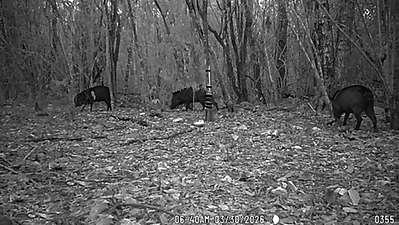
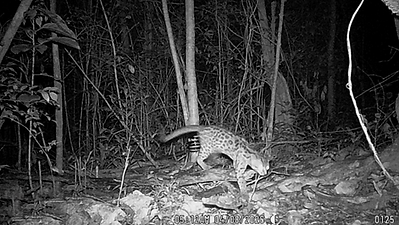

Motion-activated cameras capture wildlife without human presence, day and night.
Helps estimate population size, occupancy, and individual occurrence over time.
Reveals activity patterns, habitat use, reproduction, and interactions with other species.
Documents threats such as invasive species, human activity, and habitat disturbance.
Information from camera traps guides management decisions and protects critical habitats.
Each image helps reveal where foxes occur, how frequently they use different habitats, when they are most active, and how they interact with other wildlife.
Over time, an island-wide camera trap network can provide critical information on population size, reproduction, survival, and the threats Cozumel foxes face across an increasingly fragmented landscape.
For a species that had remained unseen for decades, even a single photograph could transform our understanding, and mark the first step toward recovery.
.png)
GENETIC INSIGHTS INTO A NEW SPECIES
DISCOVERY THROUGH DNA
Even when animals go unseen, they leave behind valuable traces, like hair. Using simple adhesive hair traps, small and unobtrusive sticky material placed near areas foxes are likely to pass, we can gently capture strands of fur as they brush by. These harmless samples provide high-quality genetic material for detailed analysis without ever disturbing the foxes.
Using advanced next-generation sequencing, this DNA can be analyzed in detail. This allows us to identify individual foxes, understand how they are related, and measure the genetic diversity of the population.
Most importantly, this approach also gives us the information needed to help formally describe the Cozumel fox as a distinct species. By comparing its genome to closely related fox populations, we can identify unique genetic signatures that define its species history.



Adhesive tape is positioned beneath a pre-measured reference marker at each camera station to collect hair samples as foxes pass, while simultaneously enabling accurate size measurements from the images captured.

Advanced sequencing can reveal genetic information to confirm presence and better understand the fox's species status. This helps us demonstrate that the Cozumel fox likely represents a new, distinct species, deserving of urgent protection.

Genetic markers from hair samples can help identify individuals and monitor movement.
Data from hair helps assess diversity and the health of the population
Next-generation sequencing will provide the data needed to officially describe the Cozumel fox as a new and distinct species.
%20(1).png)
AN UNDESCRIBED SPECIES IN DECLINE
Habitat fragmentation, invasive species, hurricanes, vehicle collisions, and expanding development of the island have pushed this remarkable animal, along with many of Cozumel's other endemic species, to the brink of extinction.

.png)
WHAT WE ARE ASKING
How many individual Cozumel foxes are left?
What is their home range?
What habitats are essential to their survival?
Where do they move throughout the island?
How do they navigate roads, resorts, urbanized areas, and fragmented forests?
How do their behaviors and movements change seasonally?
What resources are the most critical to their success?
Which threats pose the greatest risk?
OUR GOALS

Identify core habitat
Map movement corridors
Reduce mortality risks and road collisions
Manage invasive and introduced species
Protect essential ecosystems
Inform land-use planning
Guide long-term recovery strategies
Develop community driven conservation
programs and youth education workshops
Prevent the extinction of the Cozumel fox and the island's other endemic species
THE FUTURE OF COZUMEL'S FOX DEPENDS ON FINDING SOLUTIONS THAT ALLOW PEOPLE AND WILDLIFE TO COEXIST.
WHY IT MATTERS
Island species are among the most vulnerable animals on Earth.
The Cozumel fox is likely on the brink of extinction.
Protecting it not only safeguards an entire ecosystem, but also preserves Cozumel’s natural history and the cultural heritage associated with foxes in Mayan beliefs.
If we succeed here, the lessons learned and methods developed can help conserve island carnivores around the world.
HELP SAVE THE COZUMEL FOX
One of the world's rarest canids is running out of time.
Every donation helps us deploy new technology, expand surveys, and protect a species found nowhere else in the world.
EVERY SINGLE CONTRIBUTION. NO MATTER THE SIZE.
MAKES AN IMPACT.

COLLABORATORS
IN CONSERVATION
Protecting the Cozumel fox requires more than technology alone.
This project brings together conservation scientists, local communities, geneticists, biologists, and research institutions working towards a shared goal: understanding and conserving one of the most endangered canids on Earth.
By combining expertise across disciplines, our collaborators help expand survey efforts, develop new monitoring tools, analyze data, and strengthen long-term conservation planning for the fox.
OUR COLLABORATORS

Rafael Chacón
CONSERVATION DIRECTOR
COZUMEL ENDEMICS COMMITTEE
Dedicated to the conservation of Cozumel’s wildlife, with particular interest in its endemic species. He helps coordinate long-term field research and population monitoring while contributing to conservation strategies for the island’s carnivore populations. He is also passionate about youth involvement, environmental education, and community engagement in conservation.


Ricardo Peralta Muñoz
CONSERVATION BIOLOGIST
COZUMEL ENDEMICS COMMITTEE
Specializes in the conservation and ecology of Cozumel’s wildlife, helping coordinate the logistics and field support necessary for long-term monitoring and conservation initiatives. He is also actively involved in youth education and community outreach that encourages local participation in conservation and environmental awareness.

.png)
bottom of page